
What you are, and what you are not
A trained volunteer with no authority, and a federal immunity that excludes the single most dangerous thing you will do all season.
What you are
A trained volunteer. Module 1 lesson 2 covered the distinction between a spotter, a chaser and somebody who happened to be looking out of the window, and the legal position of all three is closer than people expect. Training gives you credibility in a report. It gives you no legal powers whatsoever.
None of this is a judgement about your competence. A spotter with twenty years of experience has exactly the same authority as one who finished this course yesterday, which is none.
The immunity everybody has heard of
There is a federal statute protecting volunteers of nonprofit organisations from liability for harm they cause while volunteering. It is real, it is useful, and it is much narrower than the version that circulates. Here is what it actually requires, quoted.
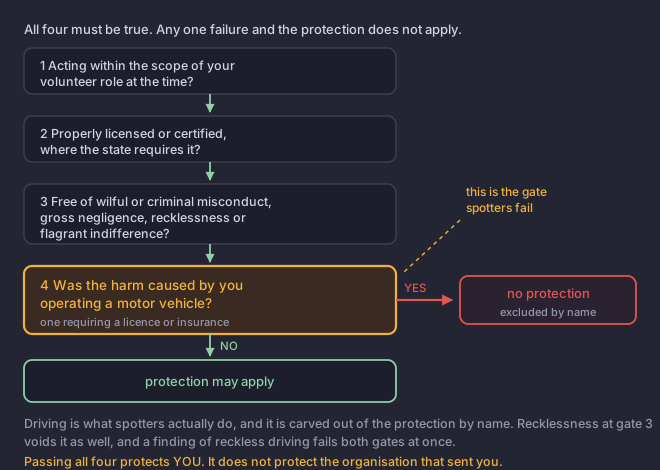
- You were acting within the scope of your responsibilities for the organisation at the time.
- You were properly licensed, certified or authorised for the activity, where the state requires it.
- The harm was not caused by wilful or criminal misconduct, gross negligence, reckless misconduct, or conscious flagrant indifference.
- The harm was not caused by operating a vehicle.
(3) the harm was not caused by willful or criminal misconduct, gross
negligence, reckless misconduct, or a conscious, flagrant
indifference to the rights or safety of the individual harmed by the
volunteer; and

(4) the harm was not caused by the volunteer operating a motor
vehicle, vessel, aircraft, or other vehicle for which the State
requires the operator or the owner of the vehicle, craft, or vessel
to
    (A) possess an operator's license; or
(B) maintain insurance.And condition three is nearly as important. Recklessness voids the protection entirely. Module 8 lesson 8 catalogued the ways people talk themselves into bad decisions; every one of those is a route to a court deciding your conduct was reckless rather than merely unlucky. The statute and the safety module are describing the same behaviour from two directions.
It protects you, not the organisation
A common and expensive misreading. The statute says explicitly that nothing in it affects the liability of the nonprofit organisation itself. The volunteer may be protected while the organisation that sent them is not. Those are two separate questions with two separate answers, and a spotter who assumes their own protection extends upward has it backwards.
Insurance, which is the practical question
This course will not tell you what your policy covers, because it does not know and neither does anybody who has not read it. What it can tell you is which questions to ask, because there is a recognised gap here and people discover it at the worst moment.
- Does my auto policy cover this activity? Some policies exclude or limit cover for activities undertaken on behalf of an organisation. Ask specifically, describing what you actually do.
- Am I covered by anybody's workers' compensation? Unpaid volunteers frequently are not, and whether they can be is a matter of state law. Do not assume.
- Does the organisation carry insurance that covers volunteers? A separate question from the statute above, and the one most worth asking before you need the answer.
A spotter volunteering for a nonprofit rear-ends another car while watching a wall cloud through the windscreen. Does the federal volunteer protection apply?
Four conditions, all required. Go through them in order and stop at the first failure.Condition four fails outright: the statute excludes harm caused by the volunteer operating a vehicle requiring a licence or insurance. Condition three is probably in trouble as well, since watching a cloud instead of the road is the kind of conduct a court may call reckless. Acting within scope is condition one and satisfying it does not rescue the others.